

MD&A · 2025
In this section4 topics
Overview of Operations
Overview of Operations
In 2025, the global economy continues to face pressure from trade tensions, specifically the implementation of U.S. import tariffs and retaliatory measures from trading partners, which have increased uncertainty within global supply chains. Production costs in various industries have risen due to volatile raw material prices and freight costs, while inflation remains high in many countries. This has led to exchange rate volatility, including the Thai Baht, which fluctuated within a wide range throughout the year.
Regarding the Thai economy, although there is sustained support from the tourism sector and segments of private consumption, overall growth remains limited. The economy has been impacted by a slowdown in exports, which moved in tandem with global economic conditions. Furthermore, political uncertainty and delays in government policy implementation have resulted in private investment and public budget disbursements falling behind schedule and failing to meet established plans.
These conditions have impacted the Group’s business operations across several dimensions, particularly regarding the price volatility of key raw materials such as steel and electrical components. These represent significant costs for the switchboard manufacturing and cable support systems business. Simultaneously, the high-voltage transmission tower and telecommunications tower manufacturing segments are facing intensified price competition due to the import of low-cost steel structures from abroad. In the Engineering, Procurement, and Construction (EPC) segment, the slowdown in public and private investment projects, combined with rising operational costs, has affected bidding activities, revenue recognition, and project returns. Amidst this challenging environment, the Group has prioritized efficient cost management and production productivity through stringent raw material inventory management. Furthermore, the Group is focusing on selecting projects with appropriate risk-return profiles to maintain competitiveness and long-term financial stability.
Regarding the 2025 financial performance, the Group maintained a net profit of Baht 16.11 million, despite sales revenue declining to Baht 1,194.82 million due to the economic slowdown and intense competition in the electrical equipment and steel structure markets. This profitability was achieved through effective cost of sales management and a significant reduction in financial costs, which dropped from Baht 31.63 million to just Baht 11.51 million. Furthermore, the Group’s results were supported by a Baht 36.49 million reversal of impairment loss on investment in an associate, resulting from the associate's capital reduction and return of capital. Other income also included a realized gain of Baht 34.44 million from the disposal of digital assets (Bitcoin). To ensure the carrying value of assets reflects the principle of conservatism, the Company recorded an additional asset impairment loss of Baht 5.51 million. Consequently, this year's performance reflects a prudent operational approach aligned with the ongoing market volatility and uncertainty.
Subsidiary in Myanmar
The subsidiary in Myanmar remains suspended due to ongoing political unrest. The Group has completed debt restructuring and fully recognized impairment losses. Given the high level of uncertainty, the Group continues to closely monitor the situation and may consider seeking strategic partners when conditions become favorable.
Subsidiary in the Lao People’s Democratic Republic
The Group recognized impairment losses on assets and investments in its subsidiary in the Lao PDR to reflect the impact of inflationary pressures, rising interest rates, and uncertainties regarding water availability for operations. The Group continues to closely monitor external factors and climate conditions to effectively manage and mitigate potential risks going forward.
Operating Results & Financial Condition
Operating Results & Profitability
Operating Results
Revenue
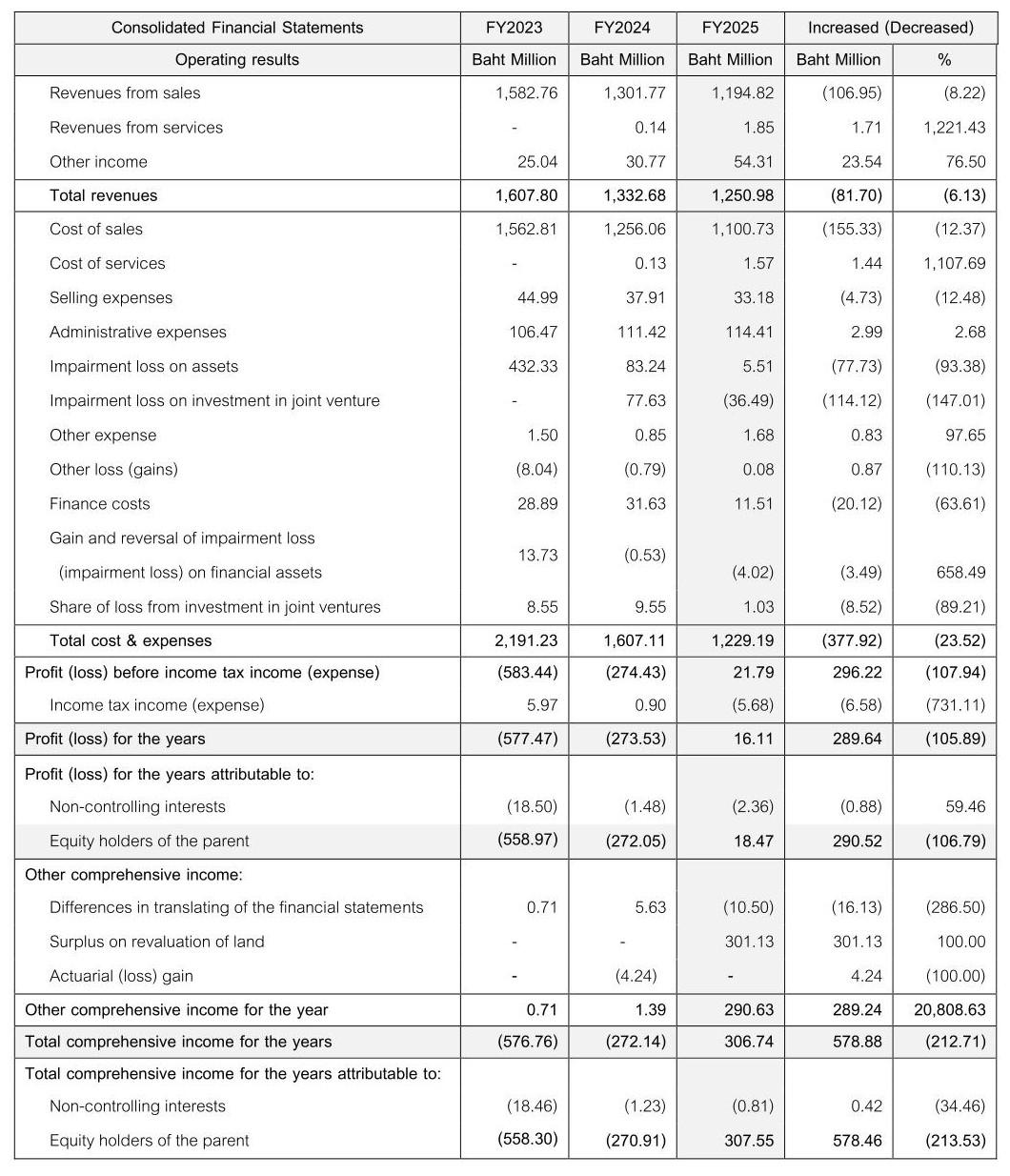
The Group reported total revenue of Baht 1,250.98 million, a decrease of Baht 81.70 million or 6.13% from the previous year. The decline was primarily attributable to an 8.22% reduction in sales revenue, which fell to Baht 1,194.82 million due to intensified price competition and a slowdown in project activities amid weak economic conditions. However, other income increased significantly by 76.50%, supported by a gain of Baht 34.44 million from the disposal of digital assets (Bitcoin), which partially offset the decline in core revenue.
Cost of Sales and Gross Profit
Cost of sales decreased significantly by Baht 155.33 million, or 12.37%, to Baht 1,100.73 million, resulting in an improvement in the gross profit margin. This was driven by the Group’s pricing strategy, which aligned selling prices with rising market steel prices—both for angle steel and steel plates—reflecting higher raw material costs and galvanizing service fees. In parallel, strict control over production costs and reductions in process losses contributed to a decline in costs that outpaced the reduction in revenue.
Selling and Administrative Expenses
The Group effectively managed its operating expenses, with selling expenses decreasing by 12.48% to Baht 33.18 million. Administrative expenses, however, increased slightly by 2.68% to Baht 114.41 million, primarily due to the annual adjustment in personnel related costs.
Impairment and Finance Costs
In 2025, impairment losses on assets declined significantly to Baht 5.51 million, representing a 93.38% reduction from the previous year. In addition, the Group recognized a reversal of impairment loss on investments in an associate amounting to Baht 36.49 million, following the associate’s capital reduction and capital return. As a result, the Group no longer incurred substantial impairment charges as seen in the prior year. Finance costs also decreased markedly by 63.60% to Baht 11.51 million, driven by the Group’s debt restructuring initiatives, which effectively reduced interest expenses
Net Profit and Total Comprehensive Income
The Group returned to profitability, recording a net profit of Baht 16.11 million, compared with a net loss of Baht 273.53 million in the previous year. The improvement was driven by effective cost of sales management, which resulted in higher gross profit, a significant reduction in finance costs, and a substantial decline in impairment losses. In addition, the Group recognized a gain from the disposal of digital assets (Bitcoin). Furthermore, when including the gain from the revaluation of land, net of tax, amounting to Baht 301.13 million—reflecting the updated fair value of the assets—the Group’s total comprehensive income for the year increased to Baht 306.74 million.
Table of Operating Results
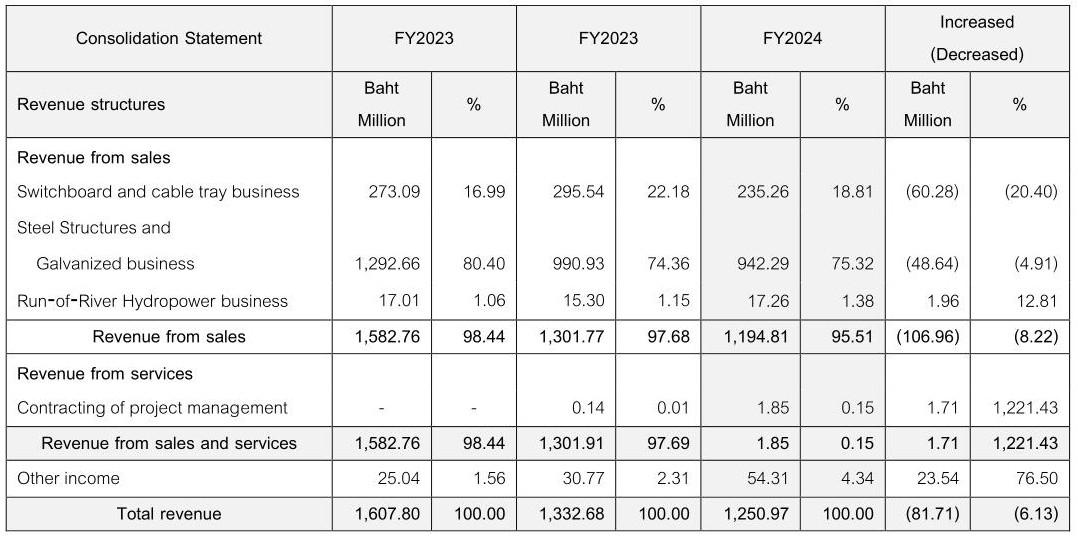
Revenue by Business Segment The Group’s total revenue in 2025 decreased by 6.13%, driven by a slowdown in sales across all business segments. The most significant decline was in the switchboard and cable tray manufacturing business, which fell by 20.40% due to intense price competition and weaker private sector project activity. Revenue from the steel pole and galvanizing business also declined by 4.91%, mainly because of delays in government bidding for power transmission system projects. However, revenue from the hydropower business increased by 12.81%, supported by improved water levels, and other income rose significantly due to gains from the sale of Bitcoin.
Switchboard and Cable Tray Business
Despite the decline in revenue from the switchboard and cable tray businesses—driven by intensified price competition and a slowdown in private sector projects—the Group secured several key contracts, including high voltage substation and transmission system upgrade projects for the Electricity Generating Authority of Thailand (EGAT), as well as control and protection system works for multiple high voltage substations in the central and eastern regions. In addition, the Group obtained cable tray installation work for major infrastructure and industrial projects, which helped support revenue during the private sector slowdown, such as:
Advanced Technology Projects: the Digital Substation Asset Management (DSAM) project under the Transmission Development Plan (TDP), and the Day One Data Center project in Bang Phi District, Samut Prakan Province
Energy and Utilities Projects: substation projects within the Gulf group, the Kathu Substation in Phuket Province, and various Solar Rooftop installation projects
Real Estate and Services Projects: the electrical system upgrade project for the Amari Don Muang Hotel
Steel Structure and Galvanizing Business
Revenue from the high voltage transmission pole business declined due to delays in the launch of new government tenders, particularly those related to the Electricity Generating Authority of Thailand’s (EGAT) high voltage transmission line projects. Nevertheless, the business continued to receive support from grid development and reinforcement projects in the Eastern region, which form part of the Transmission System Development Plan and are intended to accommodate rising electricity demand in industrial areas. In addition, the Group generated revenue from other infrastructure projects, such as the construction of the Ban Pai–Nong Phot railway bridge, which aims to enhance rail transport infrastructure and improve operational safety. Under this project, the Group was responsible for manufacturing and supplying steel structures, helping diversify revenue during the period in which transmission line tenders remained delayed.
Run of River Hydropower Business
Revenue from the run of river hydropower plants fluctuates with seasonal water levels and is affected by climate variability. Nonetheless, the hydropower business remains an important source of revenue diversification and provides long term stability when water conditions are normal.
Other Income
Other income increased due to gains from the sale of Bitcoin. General other income declined, as the Group recorded only scrap metal sales during the year (compared with both scrap metal sales and refunded management guarantees in the prior year), along with lower interest income.
Financial Position
Assets
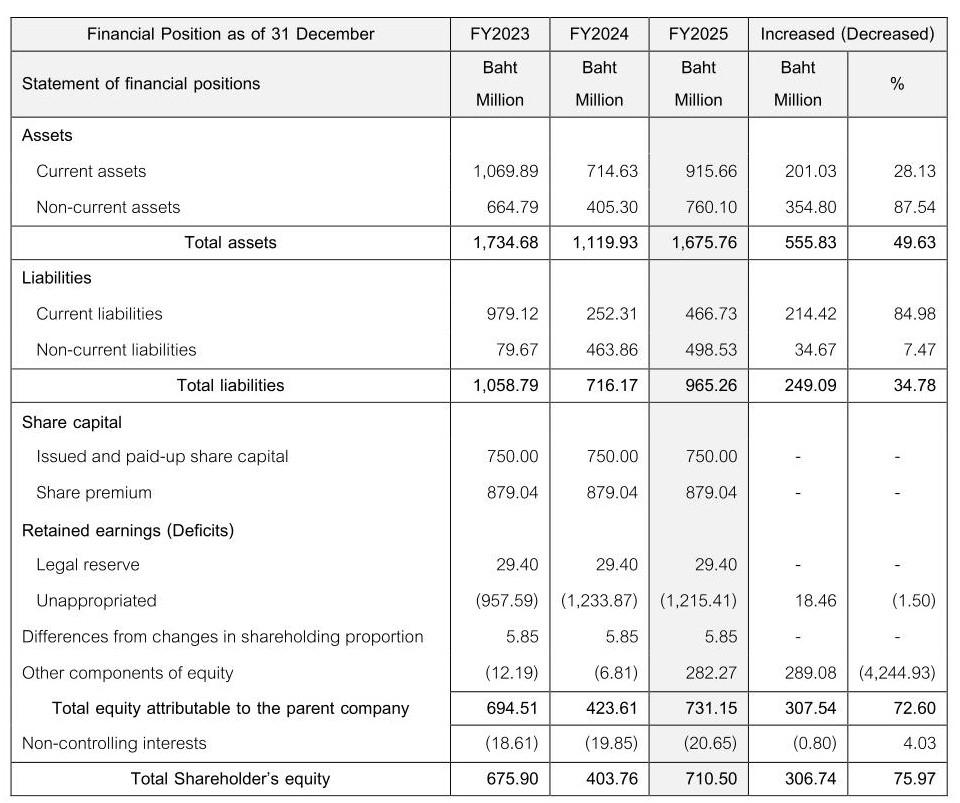
As of 31 December 2025, the Group reported total assets of Baht 1,675.76 million, an increase of Baht 555.83 million or 49.63% from the previous year. The growth was driven by increases in both current and non current assets, supported by effective liquidity management and the revaluation of assets to reflect their current market value.
Current assets increased by Baht 201.03 million, or 28.13%
Cash and cash equivalents increased due to improved operating cash inflows.
Trade and other receivables increased in line with project deliveries for transmission system works, while the allowance for doubtful accounts decreased following the recovery of previously written off debts, despite additional provisions being recognized under the prudence principle.
Inventories decreased due to accelerated project deliveries and efficient inventory management.
Short term investments decreased following the sale of investment units to support operations and digital asset investments.
Restricted bank deposits decreased as banks reduced guarantee requirements.
Non current assets increased by Baht 354.80 million, or 87.54%
Investments in Joint Ventures increased due to the reversal of impairment following the capital return received. Property, plant, and equipment increased due to land revaluation, despite normal depreciation.
Digital assets (Bitcoin) increased from purchases and disposals in line with the Group’s investment strategy.
Right of use assets (ROU)and intangible assets decreased due to depreciation and contract expiration.
Deferred tax assets decreased following reclassification to deferred tax liabilities after land revaluation.
Restricted deposits decreased in line with reduced bank guarantee limits.
Liabilities
As of 31 December 2025, total liabilities amounted to Baht 965.26 million, an increase of Baht 249.09 million or 34.78% from the previous year. Both current and non current liabilities increased, reflecting project expansion, higher operating commitments, and the effects of debt restructuring and tax adjustments related to asset revaluation.
Current liabilities increased by Baht 214.42 million, or 84.98%
Trade and other payables increased due to raw material purchases for upcoming project work.
Contract liabilities increased from advance receipts for new projects, particularly bridge construction and transmission system projects.
Corporate income tax payable increased due to profits generated by a subsidiary from Bitcoin sales.
Current portion of long term loans increased according to the repayment schedule.
Current portion of lease liabilities decreased following scheduled lease payments.
Non current liabilities increased by Baht 34.67 million, or 7.47%
Long term loans decreased due to scheduled repayments.
Accrued interest increased from interest incurred during the grace period (2024–2026), which will be paid in the final installment.
Lease liabilities decreased following regular lease payments.
Deferred tax liabilities increased due to land revaluation.
Employee benefit obligations decreased following actuarial reassessment.
Shareholders’ Equity
As of 31 December 2025, total shareholders’ equity amounted to Baht 710.50 million, an increase of Baht 306.74 million or 75.97% from the previous year, mainly due to the recognition of revaluation surplus from land appraisal.
Shareholders’ equity increased by Baht 306.74 million, or 75.97%
Retained earnings (accumulated losses) decreased in line with the Group’s operating results for 2025.
Other components of equity increased due to the recognition of land revaluation surplus.
Non controlling interests changed slightly, reflecting the performance of subsidiaries.
Operating Performance and Profitability
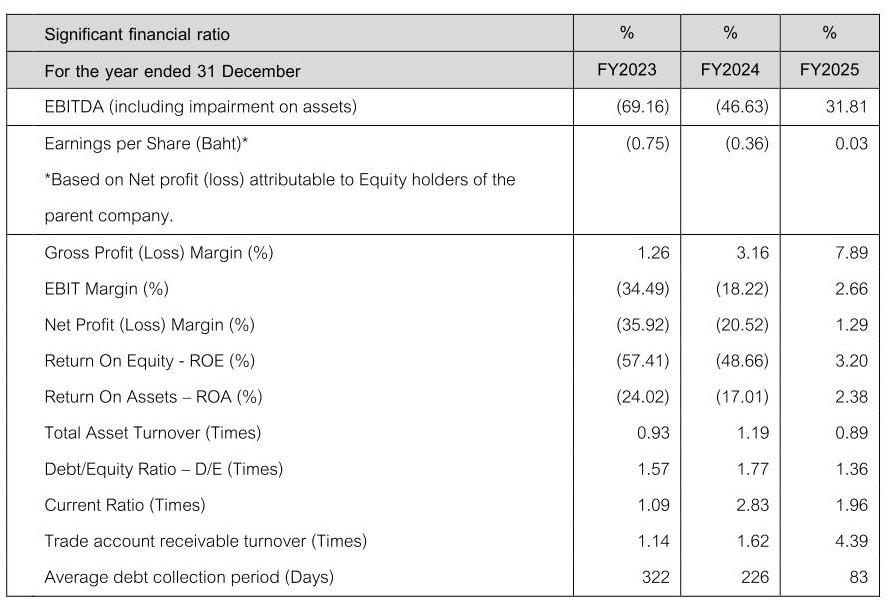
In 2025, the Group’s financial position strengthened compared with the previous year, supported by an expansion in total assets and shareholders’ equity. This improvement was primarily driven by the revaluation of land, which enhanced the robustness of the capital structure and reinforced the Group’s long term financial stability
In terms of operating performance, the Group continued to show steady improvement, with the gross profit margin rising to 7.89% as a result of effective cost management. This contributed to a return to profitability, with the net profit margin reaching 1.29%. Similarly, the return on assets (ROA) and return on equity (ROE) improved to positive levels of 2.38% and 3.20%, respectively.
Asset management efficiency also improved significantly, particularly in trade receivables, where the turnover ratio increased to 4.39 times. This led to a substantial reduction in the average collection period to 83 days, reflecting stronger receivable quality and faster cash collection supported by the recovery of previously written off debts and prudent allowance provisioning.
Regarding capital structure, the Group’s debt to equity ratio decreased to 1.36 times, primarily due to the land revaluation. Meanwhile, the current ratio remained at a healthy level of 1.96 times, which is sufficient to meet short term obligations despite a slight decline from the previous year.
Liquidity & Capital Adequacy
Cash flows from operating activities were positive at Baht 104.55 million, showing a significant improvement driven by gains from the sale of digital assets, an increase in trade payables and contract liabilities, and more efficient working capital management, despite the Group still recording a net loss.
Cash flows from investing activities were positive at Baht 67.25 million, mainly due to the sale of current financial assets, a reduction in guarantee deposits, and the disposal of digital assets, while new capital expenditures remained limited.
Cash flows from financing activities were negative at Baht 23.41 million, primarily due to repayments of long term loans and lease liabilities, although short term borrowings were drawn and repaid at relatively similar levels.
Overall, net cash increased by Baht 145.38 million, resulting in year end cash of Baht 288.88 million, reflecting stronger liquidity in 2025
Asset Management Capability
In 2025, the Group demonstrated improved efficiency in asset utilization, as reflected in higher inventory and accounts receivable turnover ratios, along with more effective working capital management. These improvements contributed to a shorter cash conversion cycle. At the same time, prudent control over capital expenditure supported an improvement in return on assets (ROA), driven by a reduction in net loss and stronger operating cash flows.
Trade Receivables
Receivable quality remained strong. Although total receivables increased, the proportion of current (not yet due) receivables rose significantly, indicating effective collection processes and reduced credit risk. Receivables aged within 3 months continued to represent the majority, while receivables aged 3–6 months increased due to delayed payments from overseas customers. For receivables over 12 months, the Group increased its allowance for expected credit losses and continued negotiations to secure gradual repayment.
Inventories
The Group exercised strict control over inventory management, with total inventories in 2025 decreasing by Baht 30.20 million, or 9.90%, driven by accelerated project deliveries and the sale of finished goods. Raw materials increased in line with production planning, while expired production materials were written off, resulting in no remaining production materials at year end. This reflects the Group’s effective management of inventory levels.
Debt Obligations & Off-Balance-Sheet Management
Guarantee Obligations
As of 31 December 2025, the Group and the Company had outstanding guarantee obligations of Baht 122.62 million and Baht 120.48 million, respectively. These guarantees were issued by banks to secure electricity usage and performance obligations, with bank deposits and land, buildings, and equipment pledged as collateral.
Capital Expenditure Commitments
As of 31 December 2025, the Group had outstanding capital expenditure commitments related to assets under construction totaling Baht 0.34 million.
Material & Related-Party Transactions
For the year ended 31 December 2025, the Company and its subsidiaries had no material transactions.
Debt Securities with Financial Ratio Requirements
Debt Securities with Financial Ratio Requirements Issued?
No
Factors That May Affect Financial Condition
Factors or Incidents That May Materially Affect Financial Condition
In 2025, the global economy experienced heightened volatility driven by the enforcement of U.S. import tariff policies and retaliatory trade measures. These developments led to rising production costs and global inflationary pressures, while also contributing to significant fluctuations in the Thai Baht. At the same time, the Thai economy expanded at a limited pace due to the fragility of the export sector and ongoing political uncertainties, resulting in delays in private investment and public budget disbursement.
Such circumstances directly affected the Group through volatile prices of steel raw materials and electrical equipment, impacting the profitability of the switchboard and cable support system businesses. Meanwhile, the high-voltage transmission pole and telecommunication tower businesses faced intense price competition due to the influx of low-cost steel structures from overseas. The Engineering, Procurement, and Construction (EPC) business was pressured by rising operating costs and a slowdown in private sector projects. Accordingly, the Group has placed strong emphasis on stringent cost management and enhanced production efficiency to maintain competitiveness in a highly competitive market environment.
1. Interest Rate and Liquidity Environment
The construction and EPC businesses are characterized by significant working capital requirements, particularly during the initial phase of projects when raw materials must be procured, construction activities commenced, and contractual guarantees provided prior to receiving progress payments. Changes in interest rates, financing costs, and credit conditions imposed by financial institutions may therefore affect interest expenses, cash flow management capabilities, and the Group’s financial liquidity.
Although domestic interest rate trends have eased compared to previous periods, liquidity within the financial system and stricter credit approval processes remain key factors requiring close monitoring. The Group therefore prioritizes prudent capital structure management, careful control of credit facilities, and disciplined cash flow management to mitigate such volatility.
2. Foreign Exchange Risk
The Group operates both domestically and internationally and is therefore exposed to foreign exchange rate fluctuations, particularly in U.S. Dollars. Such risks may arise from future trading transactions, the recognition of foreign currency-denominated assets and liabilities, and net investments in overseas subsidiaries or operations. To manage these risks, the Group structures the majority of its costs in the same currency as its revenues (natural hedge). Where necessary, the Company enters into forward foreign exchange contracts to limit currency volatility to an acceptable level.
3. Energy Transition and Emerging Technologies
The development of Smart Grid systems, Energy Storage Systems (ESS), and the increasing proportion of renewable energy in the power system present both opportunities and challenges for future business operations. National energy infrastructure investments aimed at supporting clean energy may create new business opportunities for the Group.
However, competition in markets involving new technologies is highly intense. The Company must therefore continuously enhance its engineering capabilities, technological expertise, and human resources to effectively respond to customer requirements and sustain long-term competitiveness.
The Group recognizes the importance of conducting business with due consideration to Environmental, Social, and Governance (ESG) factors, which may impact competitiveness, operating costs, stakeholder confidence, and long-term performance. Key considerations are as follows:
1. Energy Management and Greenhouse Gas Emissions
The Group’s production processes and project operations involve significant consumption of electricity and fuel. Increasingly stringent greenhouse gas reduction requirements and climate-related measures may require additional investment in high-efficiency machinery, energy management systems, or emission-reduction technologies. While such investments may increase short-term costs, they help mitigate regulatory risks and enhance long-term competitiveness.
2. Energy Transition Trends
The increasing share of renewable energy and the development of smart grid systems by national energy authorities may create business expansion opportunities in electrical systems and related infrastructure. At the same time, the Company must adapt to evolving technical requirements, new standards, and rising customer expectations regarding sustainability.
3. Talent Development and Retention
The business requires skilled electrical engineers and specialized technicians. A shortage of qualified personnel or high employee turnover may affect project efficiency, competitiveness, and operating costs. The Company therefore emphasizes continuous personnel development and the implementation of incentive programs to retain talented employees.
4. Good Corporate Governance and Transparency in Bidding
Businesses involving government projects are subject to strict legal, ethical, and procurement transparency requirements. Non-compliance may affect eligibility to participate in bidding, as well as the Company’s reputation and financial position. The Group therefore places strong emphasis on good corporate governance, internal controls, and strict legal compliance.
5. Risk Management and Internal Control
Project-based businesses are complex and high in value. Cost estimation, project management, and quality control are critical factors. Inadequate management may result in cost overruns, disputes, or future legal liabilities. The Company has therefore implemented project risk management systems, progress monitoring mechanisms, and appropriate internal control systems to ensure that such risks remain at an acceptable level.
6. Cybersecurity and Data Protection
The Group’s design, manufacturing, and project management operations rely significantly on information technology systems and digital data. Risks arising from cyberattacks, unauthorized access, or system disruptions may affect operational continuity, data accuracy, and stakeholder confidence.
The Company has established information security policies and measures, including role-based access control, antivirus and anti-malware systems, firewall and intrusion prevention systems, regular data backups, and disaster recovery plan testing to ensure business continuity in emergency situations. In addition, the Company promotes cybersecurity awareness among employees and periodically assesses information technology risks to ensure that internal control systems remain appropriate to evolving risk exposures.